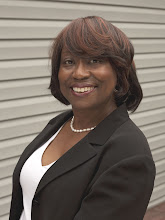
By Anna D. Banks, GCDF
Employers are said to have a preference for younger employees, which speaks of a bias against offering employment to older people. This is a common phenomenon that has prevailed since a long time but is now undergoing a subtle change to favor 'above 50' people seeking employment.
Employers have come to realize that employee maturity and experience are age related attributes gained through long exposure to varied work conditions/situations and cannot be cultivated over a short span of time. They are finding it increasingly desirable to employ seniors to benefit from the positive traits ingrained in them with the passing of time leading to better productivity and lesser workplace problems.
Among other important factors contributing to this growing disposition is the realization of work force shrinkage and apprehension of depleting wisdom levels on account of Baby Boomers hitting retirement age in a few years.
The avant-garde is already on track. Leading companies like Borders and Principal Financial, Adecco, Bank of America, Proctor and Gamble are among those who have realized the need for the creation of an older and more mature workforce that could serve as a 'knowledge pool' to counteract the impending brain drain. Combined efforts have led to the creation of companies like YourEncore and also websites like Seniors4Hire.org and RetirementJobs.com that act as hiring channels of retired personnel for specific projects. Over a dozen companies including Boeing, Eli Lilly and many others are using the services offered by YourEncore.
Very soon national companies like Petco, Radio Shack, Regal Entertainment, General Nutrition Centers, the Bank of America and a host of health care companies would be posting jobs on Seniors4Hire.org and RetirementJobs.com
Companies engaged in recruitment testify to a growing acceptance of mature workers by many employers, though at a much slower pace than desired. Many employers do not select workers of a higher age group, whereas others positively turn them away.
The sentinel for seniors, AARP (American Association of Retired Persons), features a yearly list of employers on its official web site, which it honors for the best practices related to management of 50+ workers. For example, Volkswagen of America Inc. is a 2003, 2004, 2005 and 2006 award winner, which, over the past twelve months recruited 13% of its workforce from 50+ applicants. One fourth of the company's total employees at present are over 50 years in age. It has various benefit programs for older employees.
Employment Policy Foundation (EPF) stats reveal a shortfall of 4 million workers within the next four years. It is predicted to go on increasing and the figure could go up to thirty-five million by 2030.
The major reason is the retirement of 30 million baby boomers out of 76 million born between 1946 and 1964. The senior most will turn sixty-five in 2011and will go for retirement. The trend will continue over the following years. Even discounting the fact that not all are in jobs, there still remains enough to fairly predict an acute shortage of workers to fill existing requirement which will lead to loss in production and consequently, loss in profits.
The nature of some of the jobs most likely to suffer a shortage of workers due to a large number of baby boomers among the present employee list includes:
• Elementary School teachers
• Secondary School teachers
• College and University teachers
• Educational and other Administrators
• Secretaries
• Accounting, Bookkeeping and auditing clerks
• Registered nurses
• Heavy Truck Drivers
• Janitors and cleaners etc.
© Anna D. Banks, GCDF
ANNA D. BANKS, GCDF, is a passionate advocate for baby boomers in exploring their priorities, planning and setting goals for the next stage of their lives. Assisting her clients to attract and build a professional and personal life consistent with their values is not just a goal of Anna’s, it’s her passion. Her diverse work experience in business, education and financial services enables her to help the diverse population of baby-boomers with their life, career, and personal finance coaching needs. Anna is currently Adjunct Faculty at Essex County College, where she teaches Career Development & Management. Please place a post on www.AnnaBanks.com or email your questions to me at Anna@AnnaBanks.com.
________
Author's Note:
Do you have any questions about career development or lifestyle changes for Baby Boomers, which you think others, like you, would want to know the answers? Please place a post on www.AnnaBanks.com or email your questions to me at Anna@AnnaBanks.com.
Monday, May 19, 2008
Companies that Seek Older Employees


Saturday, February 16, 2008
Kohl, Smith Release Report on Expanding Opportunities for Older Workers
This is an important step toward easing the brain drain....
WASHINGTON, D.C. – Chairman Herb Kohl (D-WI) and Ranking Member Gordon H. Smith (R-OR) of the U.S. Senate Special Committee on Aging joined today in releasing the findings of the Taskforce on the Aging of the American Workforce. The taskforce was created at the request of Senators Kohl and Smith in an effort to expand opportunities for older Americans choosing to remain in the workforce, and to develop proposals to address the challenges and opportunities of an aging workforce.
“I'm glad to finally be receiving this report. Since this taskforce convened in May 2006, nearly 5 million baby boomers have reached retirement age,” said Senator Kohl. “While the report provides a broad overview of several legal and regulatory barriers, what we really need to focus on is creating innovative workplace practices and providing attractive employer benefits to facilitate the hiring and retention of older workers.”
“By 2025 labor force growth is expected to be less than a fifth of what it is today,” said Senator Smith. “The goal of the taskforce is to prevent this dramatic decline through strategies that encourage extended work life and remove barriers that hinder seniors from working longer. This report is a good first step in what must be an on-going effort to ensure the door stays open for our seniors who wish to remain an active part of the U.S. workforce.”
The interagency effort was launched in May 2006 to focus on the aging of the American workforce and the impact of this demographic change. The Taskforce on the Aging of the American Workforce was charged with two primary goals: (1) identifying strategies to enhance the ability of older Americans to remain in or re-enter the labor market and pursue self-employment opportunities; and (2) identifying strategies to enable businesses to take full advantage of this skilled labor pool.
The report presents strategies developed by the taskforce to address the most significant issues related to the aging of the American workforce. Among other suggestions, the taskforce recommends creating an interagency group to inventory the legal and regulatory barriers and disincentives to employment of older workers. The interagency will identify the pros and cons of specific approaches to addressing each barrier. The taskforce also recommends making educational resources on retirement and financial literacy available to older workers at One-Stop Career Centers and local Social Security Administration offices.
Kohl is currently working with Special Committee on Aging Ranking Member Gordon H. Smith (R-OR on a bill that would remove barriers to working longer and incentivize employers to hire older workers.
The U.S. Senate Special Committee on Aging plans to hold a hearing in the spring on what the federal government can do to engage and retain older workers. The Committee will highlight some of the federal government’s current best practices in this arena, and look to ways improvements can be made. A second bill will likely be introduced around this time to make the federal government’s current hiring practices and procedures more friendly to older workers and will focus on increasing work schedule flexibility and phased retirement options.
Last year, Chairman Kohl introduced two bills: the Older Worker Opportunity Act of 2007 (S.709) and the Health Care and Training for Older Workers Act (S.708), both of which would give older Americans the opportunity to work longer if they so choose and offer incentives to businesses for employing older workers.
The Taskforce on the Aging of the American Workforce is composed of senior representatives from nine federal agencies: the Departments of Commerce, Education, Health and Human Services, Labor, Transportation, and Treasury; the Equal Employment Opportunity Commission; Small Business Administration; and Social Security Administration. The Taskforce is chaired by Assistant Secretary of Labor for Employment and Training, Emily Stover DeRocco.
Download your copy here Aging Workforce Taskforce Report

 Posts
Posts